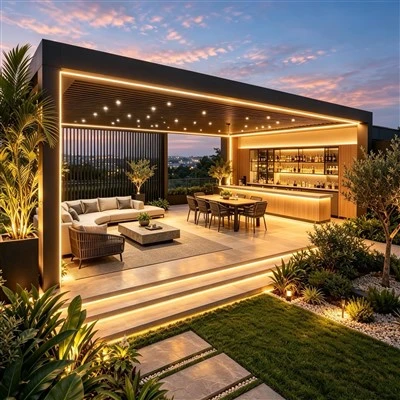
Depending on their installation location and structure, common types of awnings include window sill awnings, doorway awnings, balcony awnings, and large awnings, each with its unique characteristics.
Window sill awnings are typically installed on the outside of windows, often in an arched or sloping shape, and are relatively small, generally between 1-2 square meters. They are usually made of polycarbonate sheets (sunlight panels) or acrylic, which are lightweight and easy to install. The main function of window sill awnings is to prevent rainwater from splashing into the room, making them ideal for windows on the lower floors of residential buildings.
Doorway awnings cover the entrance to a house or shop, and are slightly larger, generally between 2-5 square meters. Their frames are often made of aluminum alloy or steel, and the roof may use color steel plates, sun panels, or canvas. These awnings provide both rain and sun protection, making them ideal for home entrances and shop front doors.
Balcony awnings cover the outside or top of balconies, with the area depending on the size of the balcony, generally ranging from 3-10 square meters. Balcony awnings can be divided into fixed and folding types. Fixed awnings often use a combination of aluminum alloy and polycarbonate panels, offering high durability; while folding awnings use canvas and steel pipes, providing flexible storage and easy adjustment as needed. This type of awning is suitable for enclosed or semi-enclosed balconies.
Finally, large awnings, such as those for shopping mall entrances and parking lot entrances, have a larger area, generally between 10-50 square meters. They often use membrane or steel structures, with large spans and high wind resistance, typically reaching level 8-10. This type of awning is ideal for commercial public areas, meeting the need for large-area sun and rain protection. When choosing an awning, the specific installation location and functional requirements should be considered.